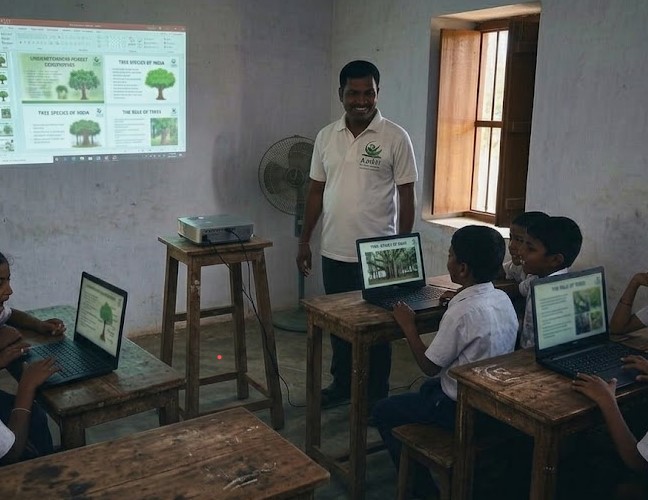
The morning air in the village was thick with anticipation. When the Aadvi Foundation team arrived with three laptops and a portable projector, the children were already waiting, their faces a mix of curiosity and uncontainable excitement. For most of these students, a computer was something seen only on passing billboards or in the hands of distant relatives. Today, it was sitting on their worn wooden desks.
We started with the absolute basics: how to hold a mouse, the gentle click of a trackpad, the way a cursor mirrors your hand's movement across the screen. Ten-year-old Neha was the first to volunteer. Her hands were hesitant at first, hovering above the keys as if they were fragile glass.
"That single keystroke wasn't just typing; it was a realization that she could interact with a world far beyond her village."
But the moment she successfully typed her own name and saw it appear in bright, bold letters on the monitor, her entire demeanor shifted. As the workshop progressed into basic internet navigation and interactive educational modules, the initial quiet focus of the classroom erupted into joyous, roaring enthusiasm.
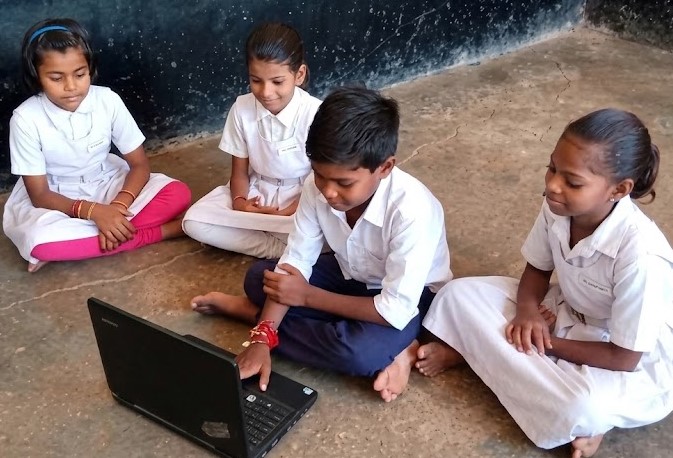
They weren't just looking at screens; they were discovering interactive maps of their own country and watching animations of how trees grow—connecting the digital world directly back to our environmental conservation roots.
By the time we packed up the equipment as the sun began to set, the question from the students wasn't if we would return, but when. True impact doesn't happen in a single day, but the spark is ignited in moments exactly like this. When you give a child the tools to understand the future, they don't just learn—they lead.